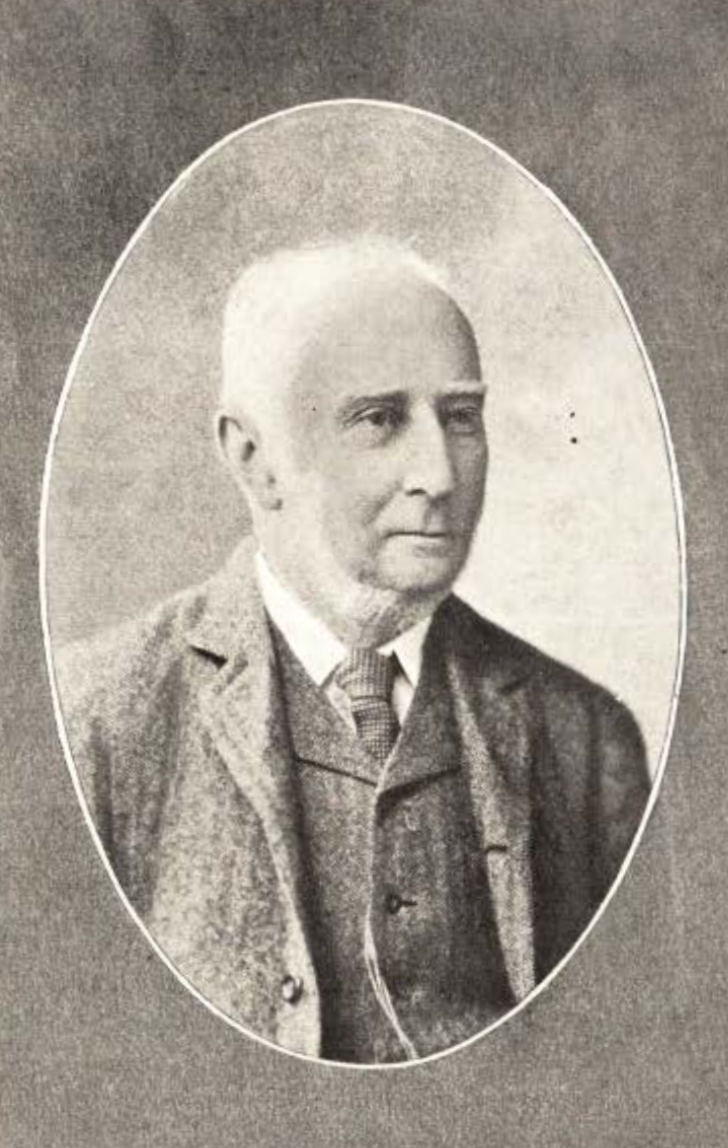
 Charles Henry Tawney (December 26, 1837 – July 29, 1922) was a distinguished British educator, scholar, and Indologist, best known for his foundational translations of
classical Sanskrit literature.
Charles Henry Tawney (December 26, 1837 – July 29, 1922) was a distinguished British educator, scholar, and Indologist, best known for his foundational translations of
classical Sanskrit literature.Queer Places:
Rugby School, Lawrence Sheriff St, Rugby CV22 5EH, Regno Unito
University of Cambridge, 4 Mill Ln, Cambridge CB2 1RZ
Charles Henry Tawney (December 26, 1837 – July 29, 1922) was a distinguished British educator, scholar, and Indologist, best known for his foundational translations of
classical Sanskrit literature.
Born on December 26, 1837, in Willoughby, Warwickshire, he was the son of the Reverend Richard Tawney. He was educated at Rugby School before entering Trinity College, Cambridge. At Cambridge, he enjoyed a brilliant academic career, becoming a Bell University Scholar (1857), a Davies University Scholar (1858), and ultimately a Senior Classic and Fellow of Trinity College in 1860. It was during his time at Cambridge that he was elected a member of the Cambridge Apostles, the prestigious intellectual secret society.
In 1864, due to health considerations, Tawney left his fellowship at Trinity to pursue a career in the Indian Education Service. He spent nearly three decades in Calcutta (now Kolkata), where he became a central figure in colonial education:
Presidency College: He served as a professor of history and later English literature, and was the Principal of Presidency College for much of the period between 1875 and 1892.
Calcutta University: He served as the Registrar of Calcutta University and played a pivotal role in the intellectual life of the city. Notably, he was instrumental in securing a permanent professorship for the scientist Jagadish Chandra Bose.
Tawney was a polyglot who mastered Sanskrit, Hindi, Urdu, and Persian in addition to his knowledge of German, Latin, and Greek. His translations were vital in making Indian classics accessible to Western audiences. His most significant contributions include:
The Kathāsaritsāgara: His massive translation of Somadeva’s Ocean of the Streams of Story remains a landmark work in the study of Indian folklore and narrative.
Other Works: He translated the Mālavikāgnimitra of Kālidāsa, the Uttara-rāma-carita of Bhavabhūti, and various Jain texts such as the Kathākośa and Merutuṅga’s Prabandhacintāmaṇi.
Tawney retired from the Indian Education Service in 1892 and returned to England. In 1893, he succeeded R. Rost as the Librarian of the India Office, a position he held until his retirement in 1903. He was appointed a Companion of the Order of the Indian Empire (C.I.E.).
He married Constance Catharine Fox in 1867, with whom he had a large family. One of his sons was the noted historian and Christian socialist R. H. Tawney, whose own work on social and economic history significantly influenced 20th-century British thought. Charles Henry Tawney died on July 29, 1922, in Camberley, Surrey.
References:
Support this project
This website is a passion project researched, developed, and funded entirely by me. If you find the content valuable and would like to help support the ongoing research and hosting costs, any contribution is deeply appreciated.
Thank you for keeping this independent resource alive!
My books on Amazon: Elisa Rolle's books